Wednesday, 21 June 2017

OCEANS RUN RED WITH BLOOD AS FAROE ISLANDERS PARTICIPATE IN ANNUAL WHALE SLAUGHTER


We like to think of ourselves as civilized and progress. Go back a few decades and see what we used to find acceptable and then compare it to know. With new knowledge, awareness, and of course, activism, we can change minds, alter ideas, and even change established practices. Tradition and heritage may hold some sway, but in light of what we now believe is inexcusable or barbaric, they fail to find full support.

This Is Horrifying

Still, there are places on this planet that are fully entrenched in their unconscionable desire to destroy. This is especially true of the age old clash of man vs. nature. On the one side is the dwindling number of pilot whales around the world. On the other is the 1000 year old practice of the Faroe Islands off of Denmark. The result is a disturbing mass slaughter which sees hundreds of these animals killed and the neighboring waterways bright red with their blood.

So Red

Source
Whaling has long been a source of livelihood for those in underdeveloped nations (Japan though). It is something that stretches back centuries and has been immortalized in art and literature. There is still a market for whale meat and the fat (known as blubber) and, even with the high profile protest and constant pressure from organizations like PETA, there are still places that make it their trade.

So Brutal

Source:akonkonnected. Com

Tuesday, 20 June 2017

Aquatic Ecosystem: interesting facts about Lampreys

SEA LAMPREY 

Sea lamprey Facts
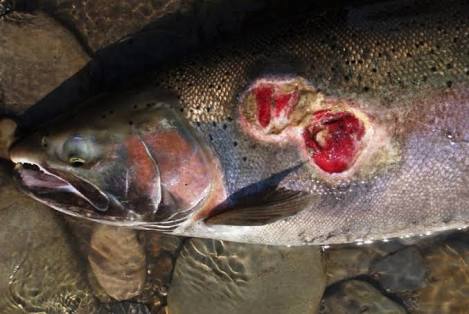
Sea lamprey is an eel-like type of primitive fish which spends part of its life in marine and part in fresh water. It is native to the Atlantic Ocean, and it can be seen near the coasts of North America and Europe. When it comes to the fresh waters, sea lamprey is native to Connecticut River ecosystem. In the first part of 20th century, sea lamprey managed to expand its habitat to Great Lakes and Lake Champlain by traveling through man-made system of canals. Sea lamprey acts as parasitic and invasive species in each new habitat. It attacks and decreases population of native fish and disturbs natural balance of the ecosystem.


Interesting Sea lamprey Facts:
Sea lampreys can reach 12 to 20 inches in length and 8 to 13 pounds in weight.
Sea lamprey has eel-shaped body that is slimy and naked. It is brown to black on the back and light yellow to light brown on the belly.
Sea lampreys are jawless fish. They have large, reddish eyes and single nostril on the top of their head.
Just like other fish, sea lamprey breathes using the gills. It has seven gill openings that are located behind the eyes.
Sea lampreys are easily recognized by the large mouth, filled with circular rows of teeth. They are designed for sucking.

Sea lamprey is feeding by sucking blood and bodily fluids of other fish. They will attach mouth to the prey like a vacuum cleaner. Sharp teeth and rasping tongue easily damages the prey's skin and induces blood flow.
Larger fish might survive attack of sea lamprey, but smaller usually dies due to serious wounds or subsequent infections.
Sea lamprey usually attacks white fish, trout and chub. Besides fish, sea lamprey feeds on small invertebrates.
Sea lamprey also uses its mouth to attach itself to the stones and take a rest during migration from marine to fresh water.
Lampreys bore into host skin, a destructive feature. 

Sea lamprey spends around 10 years in the fresh water. After that time, it migrates to sea, where it stays usually around 2 years. During that time, sea lamprey will become mature and it will return back to fresh water for spawning.
Spawning takes place in the spring. Sea lamprey can deposit as much as 100 000 eggs in the stony nests. Sea lampreys will die immediately after spawning.
A lot of eggs deposited by sea lamprey serve as food for other fish in the water.
Sea lamprey can induce significant damage to an ecosystem by killing large number of native fish species. For that reason, people use chemicals, electric fences and dams to prevent uncontrolled spreading of the sea lampreys toward sensitive rivers and lakes.
Sea lampreys can be fished and used as delicacy in certain European countries.
Average lifespan of sea lamprey is 14 years.

4 Shocking reasons you need to stop Nail-biting

Hello, do you bite your nail unconsciously? Do you go out and feel embarrassed at the look of your ugly sore nails? Or are you always sad at the injury or the blood you see after biting? Nail biting, which is also called onychophagia, is that the act of putting ones fingers in the mouth and biting/chewing on nails with the teeth.


  • Many begin this unconscious act from childhood and sometimes it graduates into adulthood. Although many people do one thing or the other, like reading a book, sitting alone or chatting with friends when biting the bails, nail biting is harmful to the health.

Various researches have shown the handful effects of nail biting, an act which is commonly practised during idleness, loneliness, boredom, stress, or depression. While some tag this act as a "bad habit," it is considered an impulsive control disorder - a compulsive habit where one cannot the urge and action to bite their nails.

  • This action should be paid close attention, especially when it gets to an high level of severity, as it affects one both physically and emotionally. The fingers which nails are bitten is much more vulnerable to viruses and bacteria than others. Imagine the diseases causing agents that can be immediately and easily transported from the fingers via the mouth into the body.

4 EFFECTS OF NAIL-BITING AND REASONS YOU NEED TO STOP
1. Dental injury;
Nail biting can cause numerous dental issues. This habit can lead to damages to your front teeth and gum tissue. Fingernail-biting habit causes dental injury which may cause a lot of serious complication, namely, gingival abscess.

2. Oral Infection;
As said earlier, the nails is a potential area for harmful microorganisms like bacteria and viruses, and when you bite - you risk unhindered transfer of diseases into your body.

3. Nail Infections;
By biting the nails, you leave room for tears in the skin around the nail. This will result to soreness, redness and swelling of the finger. This can also enable the entry of harmful germs that can cause infections.

4. Harm To Nail Beds;
Nail biting can cause harm to nail beds. Deformities like irreversible nail shortening are commonly associated with nail biting.

How to prevent Nail Biting
1. Proper self management: Nail biting may be as a result of inactivity, so you should change that by properly managing yourself.

2. Keep the nails short always to curtail the urge biting it.

3. Try to resist the urge to move carry your arms towards the face or lips.

4. Apply bitter-tasting nail polish to your nail. The bitter taste will prevent you from biting the nails.

5. Therapy which will determine the psychological cause of the habit and try to get rid of it.

It is now clear that the effects of nail biting is harmful and can leave one more depressed and embarrassed in public. Stop the bad habit today!
I hope this helps?

 Stay healthy! 

Turn down your volume: Loud music causes deafness


Loud noises can cause permanent hearing loss. And once it’s gone, you can’t get it back. Hearing loss is costly. The cost for the first year of hearing loss treatment in older adults is projected to increase more than 500% from $8 billion in 2002 to an estimated $51 billion in 2030. Hearing loss from loud noise can be prevented. About 70% of people exposed to loud noise never or seldom wear hearing protection.


CDC supports the World Health Organization’s World Hearing Day, an annual event held on March 3rd. World Hearing Day was designated at the First International Conference on Prevention and Rehabilitation of Hearing Impairment in Beijing, China in 2007. The day aims was to raise awareness and promote ear and hearing care across the world.

The theme for the World Hearing Day 2017 was “Action for hearing loss: make a sound investment’. This aims to draw attention to the economic impact of hearing loss and cost effectiveness of interventions to address it. Hearing loss is costly. The cost for the first year of hearing loss treatment in older adults is projected to increase more than 500% from $8 billion in 2002 to an estimated $51 billion in 2030.

Did You Know?
Repeated exposure to loud noise over the years can damage your hearing.

Turn down the volume!
The outer ear—the part of the ear you see—funnels sound waves into the ear canal.
By the time you notice hearing loss, many hair cells have been destroyed and cannot be repaired.
This is just one of the many informative facts available on CDC’s National Center for Environmental Health’s new hearing loss website.

Think you’re well aware of how to protect yourself? When it comes to hearing loss, we can all think of the usual suspects: listening to fireworks, attending sporting events, and loud concerts.

However, you may be surprised at what you don’t know. For example, everyday activities such as using power tools, mowing the lawn, or attending a fitness class with loud music can damage hearing.

Useful info

Is the noise too loud? If you need to raise your voice to make yourself heard, yes.
After a very loud event, such as a concert or football game, normal hearing usually returns within a few hours to a few days—however, repeated exposure to loud noises will eventually damage the inner ear permanently.
Ways to protect your hearing include turning the volume down, of course, and also taking periodic breaks from the noise and using hearing protection.
Signs that you may have hearing loss include difficulty hearing high-pitched sounds (e.g., doorbell, telephone, alarm clock) and difficulty understanding conversations in a noisy place.

By the Numbers
Sound is measured in decibels (dB). A whisper is about 30 dB, normal conversation is about 60 dB, and a motorcycle engine is about 95 dB. Loud noise over a prolonged period of time may damage your hearing. Loud noise above 120 dB, even for a short period of time, can cause immediate harm.

Hearing loss is the third most common chronic health condition in the United States. Almost twice as many people report hearing loss as report diabetes or cancer. In the United States, about 40 million adults aged 20–69 years have noise-induced hearing loss, and about 1 in 4 adults who report “excellent to good” hearing already have hearing damage.

Think that hearing damage is usually workplace-related? Actually, activities away from work can damage hearing just as much a noisy job. Over half of all adults with hearing damage do not have noisy jobs.

The average person is born with about 16,000 hair cells within their inner ear. These cells allow your brain to detect sounds. By the time changes in your hearing can be measured by a hearing test, up to 30% to 50% of hair cells can be damaged or destroyed.

There is no cure for hearing loss! Damaged inner ear cells do not grow back. Protect your hearing, and if you already have hearing loss, take steps to keep it from getting worse.

Source: https://blogs.cdc.gov/yourhealthyourenvironment/page/2/ 
Monday, 19 June 2017

Sickle cell day: 10 things you should know about sickle cell

June 19th:Today is world sickle cell day.

Sickle cell disease is an inherited form of
anemia where red blood cells become abnormally long and pointed, similar to the shape of a banana. It affects approximately 100,000 people in the United States and millions worldwide. In the US It occurs in about one out of every 365 African-American births and more rarely in Hispanic-American births. Although sickle cell disease is not an extremely rare condition, there are some lesser-known facts and misconceptions that we will review here.


  • It Can Occur in Any Race or Ethnic Group

Although sickle cell disease has long been associated with people of African descent, it can be found in many races and ethnic groups, including Spanish, Brazilian, Indian, and even Caucasian. Because of this fact, all babies born in the United States are tested for this condition.

  • An inherited Disease

Sickle cell disease is not contagious like a cold. People are either born with it or they are not. If you are born with sickle cell disease both of your parents have sickle cell trait (or one parent with sickle cell trait and the other with another hemoglobin trait). People with sickle cell trait cannot develop sickle cell disease.

  • Diagnosed at Birth

In the United States, every baby is tested for sickle cell disease. This is part of the newborn screen performed shortly after birth. Some people may refer to this as the PKU test. Identifying children with sickle cell disease in infancy can prevent serious complications

  • Connection Between Sickle Cell Trait and Malaria

People with sickle cell trait can be found most heavily in areas of the world that have malaria . This is because sickle cell trait can protect a person from becoming infected with malaria. This doesn't mean a person with sickle cell trait cannot be infected with malaria, but it is less common than a person without sickle cell trait.

  • Not All Types Are Created Equal - There are different types of sickle cell disease which vary in severity. Hemoglobin SS (also the most common type) and sickle beta zero are the most severe followed by hemoglobin SC and sickle beta plus thalassemia. 

  • More Than Just Pain
There is a lot more to sickle cell disease than just painful crises. Sickle cell disease is a disorder of the red blood cells, which supply oxygen to all the organs. Because sickle cell disease occurs in the blood, every organ in the body can be affected. Patients with SCD are at risk for stroke, eye disease, gallstones, serious bacterial infections, and anemia, to name a few.

  • Children at Risk for Stroke

Although all people with sickle cell disease are at risk for stroke, children with sickle cell disease have a much higher risk than the children without sickle cell disease. Because of this risk, physicians who treat children with sickle cell disease use an ultrasound of the brain to screen and determine who is at highest risk of stroke and start treatment to prevent this complication.

  • A Simple Antibiotic Changes Life Expectancy

The antibiotic penicillin is life-saving. People with sickle cell disease are at increased risk of serious bacterial infections. Starting penicillin twice a day for the first five years of life has changed the course of this condition from something only seen in children into a condition people live into adulthood with.

  • Treatments Are Available

There is more than pain medication for treating sickle cell disease. Today, blood transfusions and a medicine called hydroxyurea are changing the lives of people with sickle cell. These therapies are allowing people with sickle cell disease to live longer lives with fewer complications. Multiple research studies are ongoing to find additional treatment options.

  • There Is a Cure

Bone marrow (also called stem cell) transplantation is the only cure. The best success has come from donors who are siblings whose genetic makeup matches the person with sickle cell disease. Sometimes types of donors, like unrelated individuals or parents, are use but mostly in clinical research studies. In the coming years, gene therapy looks like a promising treatment.
If you or your family member has sickle cell disease, it is important to have regular follow-up with a physician to ensure up to date care is provided.

Source:
National Heart, Lung, and Blood Institute. Evidence-based Management of Sickle Cell Disease: Expert Panel Report, 2014.

Pls share this post with others 
Tuesday, 13 June 2017

11 health conditions onions can help you with

11 Health Conditions Onions Can Help You With
Onions are native to Asia and The Middle East. Onion is the most cultivated species of the genus Allium, and the cultivation goes back to over 5000 years. It has also been used in traditional medicines since ancient times for its health promoting and curative properties.
The flavonoids in onion, which are responsible for many of the health benefits, are usually more concentrated in the outer layers of the bulb. To get the maximum benefit, try to peel as little of the outer skin as possible.

Nutritional Value Of Onions
Vitamin C – 11.1 milligrams. 19% RDA (Recommended daily value)
Folate – 28.5 micrograms. 7% RDA
Potassium – 219 milligrams. 6% RDA
Manganese – 0.2 milligrams. 10% RDA
Fiber – 2.6 grams. 10% RDA
Vitamin B6 – 0.2 milligrams. 9% RDA

11 Proven Health Benefits of Eating Onion

  • Prevents Diabetes

Onions are good for people who have diabetes, and people should include red onions regularly in their diet. A single serving of onions contains 27% of your biotin DRI. Biotin has many positive impacts on your health, one of which is combatting symptoms associated with type 2 diabetes. Early research suggests that a combination of biotin and chromium might help regulate blood sugar and even decrease insulin resistance.

  • Fight Cancer

Onion extract is rich in a variety of sulfides, which provide some protection against tumor growth. Some studies have shown, regular consumption of onions helps to reduce the risk of several cancers such as colorectal cancer, oral cancer, laryngeal cancer, stomach cancer, esophageal cancer, and ovarian cancer.

  • Builds Strong Immunity

Due to their polyphenol content, onions can help boost your immunity by protecting your body against free radicals. Plus, onions contain a trace mineral selenium that helps improve immunity by initiating an immune response and also preventing an excessive immune response.

  • Lowers bad cholesterol

Studies at the Chinese University of Hong Kong show that onions can help reduce the levels of bad cholesterol. Studies show that consuming half a raw onion daily can help to raise the good HDL cholesterol by 30%. Chives, garlic, and shallots are also effective. They all come from the Allium family.

  • Relieving Earache

A few drops of onion juice may actually prove immensely beneficial to individuals suffering from an acute earache. The ringing sound in the ear may be cured by applying onion juice through a piece of cotton wool.

  • Tooth Decay

Raw onions may make our breath stink, but they can actually improve our oral health. Simply chewing a raw onion can strengthen teeth and eliminate bacteria that can lead to tooth decay. Two to three minutes of chewing on an onion can kill most germs in the mouth.

  • Improve Digestion

Onions are high in fiber, which is good for maintaining a healthy and regular digestive system. Fiber prevents digestive pain and breaks down food can keep it moving.

  • Boosts Sexual Drive

Onions are said to increase the urge for a healthy sex life. One table spoon of onion juice along with one spoonful of ginger juice, taken three times a day, can boost the libido and sex drive.

  • Stimulate Hair Growth

Onion is rich in sulfur which is one of the essential nutrients in promoting hair growth. A study has shown that applying onion juice on scalp twice a week for 2 months will stimulate hair regrowth.

  • Sinus Relief

For a clogged nose and sinusitis problems, onions can help to loosen mucous, clearing the nasal passages and making breathing easier.

10 common habits that seriously damage your kidney


There is an increased rate of mortality as a result of kidney damage lately. Hence, the need for proper care of our kidneys. This article outlines some of the few habits that contribute to kidney damage. 

   Our kidneys are super important for our health. They filter our blood, produce hormones, absorb minerals, produce urine, eliminate toxins, and neutralize acids. So as one of the most important organs in your body, your kidneys deserve some love.
Damage or steady decline of your kidneys can often go unnoticed for years as your kidneys can still do their job with as little as 20% of their capacity. Therefore kidney diseases are often referred to as “The Silent Diseases”. That’s why it is so important to take care of them before it is too late.
Here’s a list of 10 common habits that put a lot of pressure on your kidneys and can cause serious damage over time.

1. Not Drinking Enough Water
Your kidney’s most important function is to filter blood and eliminate toxins and waste materials. When you don’t drink enough plain water during the day toxins and waste material start to accumulate and can cause severe damage to your body.

2. Too Much Salt In Your Diet
Your body needs sodium or salt to work properly. Most people however consume too much salt which may raise blood pressure and put a lot of stress on the kidneys. As a good rule of thumb, no more than 5 grams of salt should be eaten on a daily basis.

3. Frequently Delaying The Call Of Nature
Many of us ignore the urge to go because they are too busy or want to avoid public bathrooms. Retaining urine on a regular basis increases urine pressure and can lead to kidney failure, kidney stones, and incontinence. So listen to your body when nature calls.

4. Kick The Sugar Habit
Scientific studies show that people who consume 2 or more sugary drinks a day are more likely to have protein in their urine. Having protein in your urine is an early sign your kidneys are not doing their job as they should.

5. Vitamin And Mineral Deficiencies
Eating a clean, whole food diet full of fresh vegetables and fruits is important for your overall health and a good kidney function. Many deficiencies can increase the risk of kidney stones or kidney failure. Vitamin B6 and magnesium, for instance, are super important to reduce the risk of kidney stones.
An estimated 70 to 80 percent of Americans isn’t getting enough magnesium, so there may be a good chance that you are one of them.

6. Too Much Animal Protein
Over consumption of protein, especially red meat, increases the metabolic load on your kidneys. So more protein in your diet means your kidneys have to work harder and this can lead to kidney damage or dysfunction over time

7. Sleep Deprivation
We have all heard how important it is to get a good night’s rest. Chronic sleep deprivation is linked to many diseases and kidney diseases are also on the list. During the night your body repairs damaged kidney tissue, so give your body the time to heal and repair itself.

8. Coffee Habit
Just as salt, caffeine can raise blood pressure and put extra stress on your kidneys. Over time excessive consumption of coffee can cause damage to your kidneys.

9. Painkiller Abuse
Way too many people take painkillers for their small aches and pains, while there are many all-natural, safe remedies available. Excessive use or painkiller abuse can lead to severe damage of liver and kidneys.

10. Alcohol Consumption
Although there is nothing wrong with enjoying a glass of wine or having a beer once in a while, most of us don’t stop after just one drink. Alcohol is actually a legal toxin that puts a lot of stress on our kidneys and liver.

To stay healthy and avoid kidney issues it is important to eat lots of fresh, whole foods and if you keep the above information in mind and avoid these common habits as much as possible, your kidneys will not be under constant stress and your body will thank you for that.

Source:naturalnewsblogs.com